
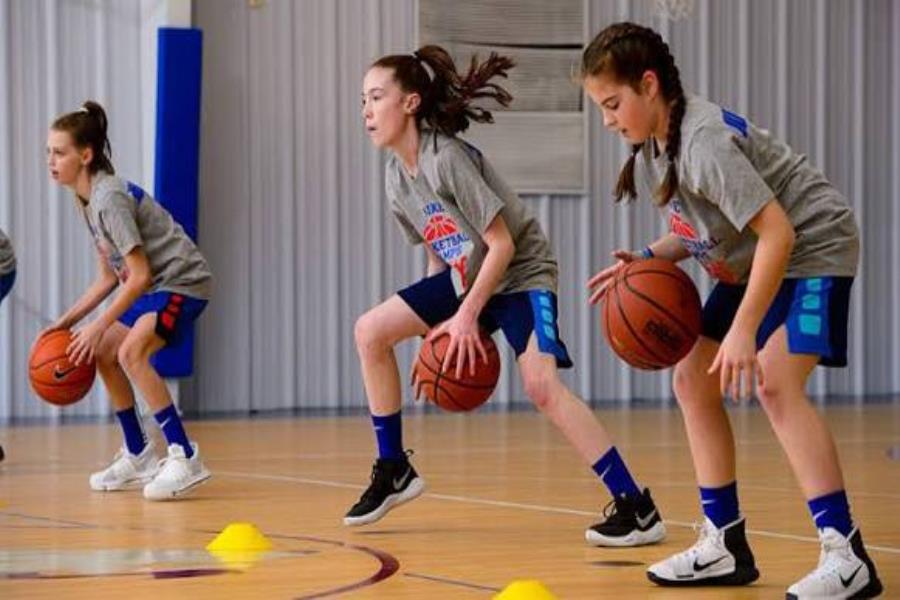
Knowing what passes are in basketball helps players to move the ball quickly, open up shooting opportunities and prevent turnovers. There is a purpose for each pass. A chest pass is effective when playing in open space. A bounce pass has the potential to get under the arm of a defender. Ball can be passed overhead to evade pressure.Passing is not just throwing the ball to another player. Timing, Precision, Vision, and decision making are essential. The player must readand know types of passes in basketball and the defender before decide on a passing angle.This booklet covers the fundamentals of the passes in basketball, how they are performed and when players should utilize them.
What Are the Main Types of Passes in Basketball?
The main types of passes in basketball are the chest pass, bounce pass, overhead pass, one-handed push pass, baseball pass, wraparound pass, hook pass, behind-the-back pass, lob pass, pocket pass, skip pass, and outlet pass.
Featured Snippet Answer
The most common types of passes in basketball include:
- Chest pass
- Bounce pass
- Overhead pass
- One-handed push pass
- Baseball pass
- Wraparound pass
- Hook pass
- Behind-the-back pass
- Lob pass
- Pocket pass
- Skip pass
- Outlet pass
A player should select a pass based on distance, defensive pressure, teammate position, and available space.
Types of Passes in Basketball Quick Fact Table
| Pass | Best Used For | Distance | Difficulty |
| Chest pass | Fast passes through open space | Short to medium | Beginner |
| Bounce pass | Passing under defenders | Short to medium | Beginner |
| Overhead pass | Passing over defensive pressure | Medium | Beginner |
| One-handed push pass | Quick passes while moving | Short to medium | Intermediate |
| Baseball pass | Long-distance transitions | Long | Intermediate |
| Wraparound pass | Passing around a defender | Short | Intermediate |
| Hook pass | Passing over or around pressure | Medium | Intermediate |
| Behind-the-back pass | Avoiding an active defender | Short | Advanced |
| Lob pass | Reaching a cutter near the rim | Medium | Intermediate |
| Pocket pass | Feeding a player after a screen | Short | Advanced |
| Skip pass | Passing across the court | Long | Intermediate |
| Outlet pass | Starting a fast break | Medium to long | Intermediate |
USA Basketball describes passing as a core skill that moves the ball quickly and forces defenders to react. Its teaching materials cover foundational options such as chest, bounce, overhead, and one-handed passes.
Why Learning Different Basketball Passes Matters
Understanding the types of passes in basketball gives a player more ways to beat defensive pressure.
A team that relies on only one pass becomes predictable. Defenders can anticipate where the ball is going. A team that changes passing height, speed, and direction is harder to guard.
Good passing can help a team:
- Move the defense out of position
- Find open shooters
- Feed players near the basket
- Start fast breaks
- Escape double teams
- Reduce unnecessary dribbling
- Create better scoring chances
The best pass is not always the hardest one. It is the pass that reaches the target safely and at the right time.
1. Chest Pass
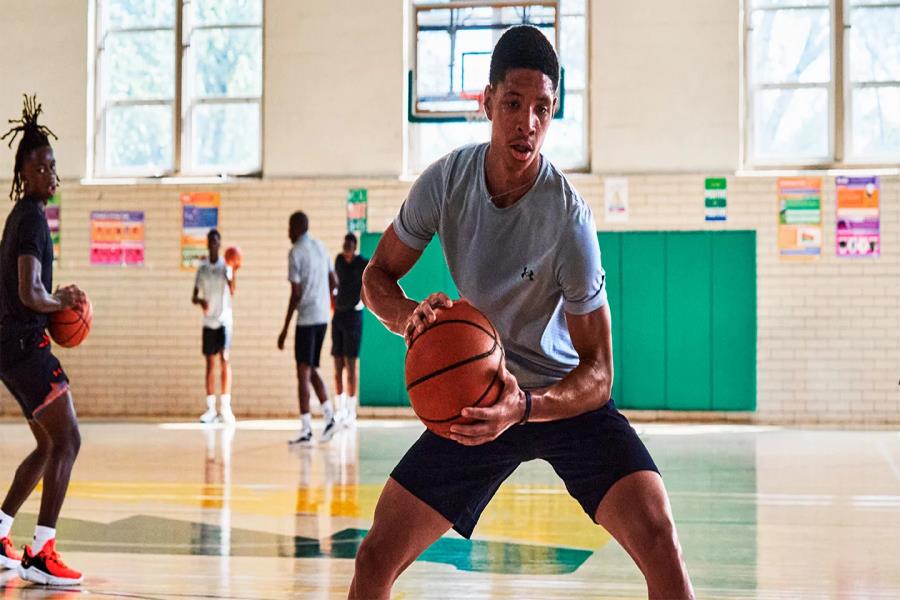
The chest pass is one of the first types of passes in basketball taught to young players. It is fast, direct, and easy to control.
To make a chest pass, hold the ball near your chest with both hands. Step toward the target. Extend your arms and snap your wrists. Your thumbs should point down after the release.
The ball should travel toward the receiver’s chest without touching the floor.
When to Use a Chest Pass
Use a chest pass when:
- The passing lane is open
- Your teammate is close
- No defender is blocking the middle
- You need to move the ball quickly
Chest Pass Example
A point guard stands at the top of the key. The shooting guard becomes open on the wing. The point guard sends a firm chest pass directly to the shooting guard’s hands.
Common Mistake
Do not float the ball slowly through the air. A weak chest pass gives a defender time to intercept it.
2. Bounce Pass
There are other types of passes in basketball, such as the bounce pass. The ball is bounced once on the ground before it gets to the receiver.
A bounce pass is helpful when the defender has hands open in front of their chest. The passer passes the ball under those hands and into the receiver’s target area.
Move towards the target and throw the ball with sufficient force. The bounce will usually occur after half way between the passer and the receiver. Guidance for Jr. NBA practice also has players step towards the target and extend their arm when making this pass.
When to Use a Bounce Pass
Use a bounce pass when:
- A defender’s hands are raised
- Passing to a cutter
- Feeding a post player
- Passing through a narrow space
- A direct chest pass is not available
Bounce Pass Example
A forward cuts toward the basket. A defender reaches into the direct passing lane. The ball handler uses a bounce pass to send the ball below the defender’s arms.
3. Overhead Pass
The overhead pass is one of the best types of passes in basketball for moving the ball over defensive pressure.
Hold the ball with both hands above your forehead. Keep your elbows slightly bent. Step forward and extend your arms toward the target.
Do not move the ball too far behind your head. That motion makes the pass slower and gives defenders time to react.
When to Use an Overhead Pass
Use an overhead pass when:
- A defender is close
- Passing over a shorter defender
- Reversing the ball
- Feeding the post
- Making an outlet pass
Overhead Pass Example
A rebounder catches the ball while defenders surround the lane. The player raises the ball and makes an overhead pass to a guard near the sideline.
Read Also: Autumn Fleary: Biography, Basketball Career, Stats, and Duke Commitment
4. One-Handed Push Pass
The one-handed push pass is one of the most useful types of passes in basketball for guards who are dribbling or moving at speed.
The passer controls the ball with one hand and pushes it toward the receiver. The pass can be made from the side of the body to avoid a defender.
Players should practice it with both hands. A player who can pass only with the dominant hand becomes easier to defend.
When to Use a Push Pass
Use a one-handed push pass when:
- Passing directly from a dribble
- Turning a corner after a screen
- Passing around a defender
- Making a quick drive-and-kick pass
- There is little time for a two-handed setup
Push Pass Example
A guard drives into the paint. A defender moves over to stop the drive. The guard uses a left-handed push pass to reach an open teammate in the corner.
5. Baseball Pass
The baseball pass is one of the long-distance types of passes in basketball. It is made with one hand using a motion similar to throwing a baseball.
Players often use it after a rebound, steal, or made basket. It can move the ball from one end of the court to the other.
Accuracy is more important than throwing power. The passer must lead the receiver without sending the ball out of bounds.
When to Use a Baseball Pass
Use a baseball pass when:
- Starting a fast break
- A teammate is open down the court
- Time is running out
- A shorter pass cannot reach the target
Baseball Pass Example
A center grabs a defensive rebound. A guard is already sprinting toward the other basket. The center throws a long baseball pass ahead of the guard.
6. Wraparound Pass
The wraparound pass is one of the types of passes in basketball used to pass around a defender’s body.
The passer moves the ball outside the defender’s reach and sends it around the defender’s hip or side. It can be made with one or two hands.
This pass is common when feeding the post or passing after a drive.
When to Use a Wraparound Pass
Use a wraparound pass when:
- A defender blocks the direct lane
- Passing to a post player
- Passing from a jump stop
- A teammate is positioned beside a defender
Wraparound Pass Example
A guard stops near the free-throw line. A defender stands between the guard and the center. The guard steps to the side and wraps the pass around the defender.
7. Hook Pass
The hook pass is one of the less common types of passes in basketball, but it can help against close pressure.
The passer holds the ball with one hand and swings the arm in a hook-like motion. The ball travels over or around the defender.
It is often used by taller players near the post. However, guards can also use it when trapped.
When to Use a Hook Pass
Use a hook pass when:
- A defender blocks a normal passing lane
- Passing over pressure
- Passing from the post
- Escaping a trap
Hook Pass Example
A post player catches the ball near the block and sees a teammate cutting along the baseline. The post player uses a hook pass over the defender.
8. Behind-the-Back Pass
The behind-the-back pass is one of the advanced types of passes in basketball. It moves the ball behind the passer’s body before reaching a teammate.
This pass should serve a clear purpose. It should not be used only to impress spectators. A simple pass is better when the passing lane is open.
The behind-the-back pass works best when a defender expects the ball to stay in front of the passer.
When to Use a Behind-the-Back Pass
Use it when:
- A defender blocks the front passing lane
- Passing during a fast break
- Changing the ball’s direction quickly
- Protecting the ball from a reach
Behind-the-Back Pass Example
Two offensive players attack one defender during a fast break. The ball handler draws the defender and sends a behind-the-back pass to the teammate running on the other side.
9. Lob Pass
The lob pass is one of the high-arching types of passes in basketball. The ball travels over a defender before dropping toward the receiver.
A lob must have the correct height and timing. A pass that is too low can be stolen. A pass that is too high may carry the receiver away from the scoring area.
When to Use a Lob Pass
Use a lob pass when:
- A teammate cuts behind the defense
- Feeding a taller post player
- Throwing an alley-oop
- A defender is fronting the post
- Passing over a smaller defender
Lob Pass Example
A center is positioned near the rim while a defender stands in front. The guard throws a soft lob over the defender so the center can catch it.
10. Pocket Pass
The pocket pass is one of the most important types of passes in basketball in pick-and-roll offense.
The ball handler passes through a small space between two defenders. The pass usually reaches the rolling player near the lane.
It may be delivered as a bounce pass or a quick one-handed pass. Timing is critical because the passing window can close quickly.
When to Use a Pocket Pass
Use a pocket pass when:
- Running a pick-and-roll
- The screener rolls toward the basket
- Two defenders focus on the ball handler
- A narrow passing window opens
Pocket Pass Example
A center sets a screen for the point guard. The center then rolls toward the basket. The guard sends a quick bounce pass through the gap between the defenders.
11. Skip Pass
The skip pass is one of the cross-court types of passes in basketball. It moves the ball from one side of the court to the other without stopping at a player in the middle.
The pass can punish a defense that has shifted too far toward the ball. It is often used to find an open shooter on the weak side.
The passer must place the ball away from nearby defenders.
When to Use a Skip Pass
Use a skip pass when:
- The defense collapses into the lane
- A shooter is open on the opposite side
- Reversing the ball against zone defense
- A normal passing route is too slow
Skip Pass Example
A forward drives from the left wing. Three defenders move toward the ball. The forward throws a skip pass to an open shooter in the right corner.
12. Outlet Pass
The outlet pass is one of the transition-focused types of passes in basketball. It is usually the first pass after a defensive rebound.
The rebounder looks for a guard near the sideline or farther up the court. A quick and accurate outlet pass can begin a fast break before the defense gets set.
When to Use an Outlet Pass
Use an outlet pass when:
- A player secures a defensive rebound
- A guard is open near the sideline
- The team wants to run in transition
- Defenders are still moving toward the basket
Outlet Pass Example
A power forward collects a rebound. Instead of dribbling through traffic, the forward makes an overhead outlet pass to the point guard.
Meanings of Basketball Passes Across Game Situations
The types of passes in basketball do not change their basic meaning across leagues. However, players may use them differently based on age, skill, spacing, and defensive pressure.
Types of Passes in Basketball Across Playing Levels
| Playing Level | Common Passes | How They Are Used |
| Youth basketball | Chest, bounce, overhead | Building control and correct technique |
| High school basketball | Push, skip, outlet, lob | Beating pressure and improving team offense |
| College basketball | Pocket, hook, skip, wraparound | Reading structured defenses |
| Professional basketball | All passing forms | Creating small advantages at high speed |
| Street basketball | Behind-the-back, push, lob | Handling pressure in open or tight space |
| Video games | Icon, directional, lob, bounce commands | Controlling virtual teammates and passing style |
Types of Passes in Basketball Example Table
| Game Situation | Recommended Pass | Reason |
| Teammate open nearby | Chest pass | Fast and direct |
| Defender has high hands | Bounce pass | Travels below the defender |
| Passing over pressure | Overhead pass | Uses a higher release point |
| Teammate running downcourt | Baseball pass | Covers a long distance |
| Defender blocks the middle | Wraparound pass | Changes the passing angle |
| Screener rolls to the rim | Pocket pass | Fits through a small gap |
| Shooter open across court | Skip pass | Moves the ball over multiple defenders |
| Post player has inside position | Lob pass | Travels over the defender |
| Starting a fast break | Outlet pass | Moves the ball ahead quickly |
| Defender reaches in front | Behind-the-back pass | Protects and redirects the ball |
How to Choose the Right Pass
Knowing the types of passes in basketball is only the first step. Players must also know which option fits the moment.
Before passing, check four things.
Read the Defender’s Hands
High hands may create space for a bounce pass. Low hands may leave space for a chest pass or overhead pass.
Check the Distance
A chest pass works well over a short or medium distance. A baseball pass is more suitable for a teammate far down the court.
Watch Your Teammate’s Movement
Pass to where the teammate is going. Do not always pass to where the teammate is standing.
Consider the Risk
A difficult pass is not automatically a good pass. Use the safest option that still creates an advantage.
Basic Passing Technique
Most types of passes in basketball share several fundamentals:
- Stay balanced.
- Keep your head up.
- See the target.
- Step toward the receiver when possible.
- Use the wrists and fingers.
- Pass away from defenders.
- Give the receiver a clear target.
- follow the teammate’s movement.
- Use both hands during practice.
- Avoid telegraphing the pass.
The receiver also has responsibilities. The receiver should show the hands, move toward the pass, secure the ball, and protect it after the catch.
Common Passing Mistakes
Players can understand the types of passes in basketball but still make poor decisions.
Staring at the Target
Watching one teammate for too long tells defenders where the ball is going.
Passing Too Softly
A slow pass gives defenders more time to react.
Passing Without Balance
Jumping without a clear plan can leave a player trapped in the air.
Throwing at a Teammate’s Feet
A low pass slows the offense and makes the catch harder.
Ignoring the Defender
The passer must read the defender before selecting a passing lane.
Using a Flashy Pass Without a Reason
Advanced passes should solve a problem. They should not create unnecessary risk.
How to Practice the Types of Passes in Basketball
Players improve the types of passes in basketball through repetition and game-like decisions.
Wall Passing Drill
Stand a few feet from a wall. Choose a target and complete chest passes, bounce passes, and one-handed passes. Focus on accuracy.
Partner Passing Drill
Work with a teammate. Change the distance after every set. Practice passing with both hands and catching in an athletic stance.
Moving Target Drill
Ask a teammate to cut in different directions. Pass ahead of the movement instead of throwing behind the receiver.
Defender Reading Drill
Place a defender between two offensive players. The defender changes hand position. The passer must select a chest, bounce, overhead, or wraparound pass.
Fast-Break Passing Drill
Use three players running down the court. Move the ball without unnecessary dribbles. Practice chest passes, push passes, and bounce passes at speed.
Pick-and-Roll Passing Drill
Practice passing to a rolling teammate. Use pocket passes, bounce passes, lobs, and skip passes based on the defender’s position.
Best Passes for Beginners
Beginners do not need to master every one of the types of passes in basketball immediately.
Start with:
- Chest pass
- Bounce pass
- Overhead pass
- One-handed push pass
- Outlet pass
These options provide the foundation for more advanced passing. Players should build accuracy before trying difficult passes under pressure.
Best Passes for Guards
Guards often use more types of passes in basketball because they handle the ball and create offense.
Important passes for guards include:
- One-handed push pass
- Pocket pass
- Skip pass
- Bounce pass
- Lob pass
- Behind-the-back pass
- Wraparound pass
A guard must pass with either hand and from different body positions.
Best Passes for Post Players
Post players also need several types of passes in basketball.
Useful post passes include:
- Overhead pass
- Hook pass
- Wraparound pass
- Skip pass
- Outlet pass
- Lob pass
Post players often see cutters and open shooters after the defense collapses around them.
Which Basketball Pass Is Most Effective?
There is no single pass that works in every situation. The most effective choice depends on the defender, distance, timing, and teammate position.
The chest pass is often the simplest option in open space. The bounce pass works well under pressure. The overhead pass helps players pass over defenders. The pocket pass is useful in pick-and-roll action.
A skilled player understands all the types of passes in basketball and chooses the simplest safe option.
Social Media Links for Basketball Learning
The NBA’s official website lists its accounts across major social platforms, including Facebook, Instagram, TikTok, X, and YouTube.
| Platform | Official Basketball Account | Valid Link | Useful Content |
| NBA | https://www.instagram.com/nba/ | Highlights and passing clips | |
| X | NBA | https://x.com/NBA | News, scores, and play updates |
| NBA | https://www.facebook.com/nba/ | Highlights and league updates | |
| YouTube | NBA | https://www.youtube.com/@NBA | Game clips and player highlights |
| TikTok | NBA | https://www.tiktok.com/@nba | Short basketball videos |
| USA Basketball | https://www.instagram.com/usabasketball/ | National team and skill content | |
| YouTube | Jr. NBA | https://www.youtube.com/@JrNBA | Youth drills and coaching content |
Final Thoughts
Learning the types of passes in basketball can make any player more useful on offense. Start with the chest pass, bounce pass, and overhead pass. Then add one-handed, outlet, skip, lob, and pocket passes as your control improves.
Practice each pass with both hands. Learn to read defenders. Deliver the ball where your teammate can catch it without slowing down.
The best pass is rarely the most difficult one. It is the pass that arrives safely, creates an advantage, and helps the team make the next play.
Read Also: USA vs Spain Basketball Match Preview: Rivalry, Key Matchups and Prediction
FAQs
What are the basic types of passes in basketball?
The basic types of passes in basketball are the chest pass, bounce pass, overhead pass, and one-handed push pass.
How many types of passes are there in basketball?
There is no fixed total. Coaches commonly teach 10 to 12 main types of passes in basketball based on game situations.
What is the most common basketball pass?
The chest pass is one of the most common passes because it is quick, direct, and easy for beginners to learn.
What is the safest pass in basketball?
A firm chest pass is often safest when the passing lane is open and the receiver is nearby.
What pass should be used under a defender’s hands?
A bounce pass can travel under a defender’s hands and reach a cutter or post player.
What pass should be used over a defender?
An overhead pass or lob pass can move the ball over a defender, depending on the distance and target.
What is a pocket pass?
A pocket pass travels through a narrow space between defenders, usually to a player rolling after setting a screen.
What is a skip pass?
A skip pass moves the ball from one side of the court to the other, often finding an open weak-side shooter.
What is an outlet pass?
An outlet pass is the first pass after a defensive rebound and often starts a fast break.
Is a behind-the-back pass useful?
Yes. It can protect the ball and avoid a defender, but players should use it only when it offers a clear advantage.
Which pass is best for a fast break?
Chest passes and push passes work well for short fast-break exchanges. A baseball pass can reach a distant teammate.
How can beginners improve passing?
Beginners should practice chest, bounce, and overhead passes against a wall and with a partner before adding defensive pressure.
2 Comments