The best basketball drills for kids focus on the essentials of the game and make practice seem like a breeze. It is important for young players to have clear instructions, frequent movement and opportunities to have the ball. A good session should include dribbling, passing, shooting, defence and team work.
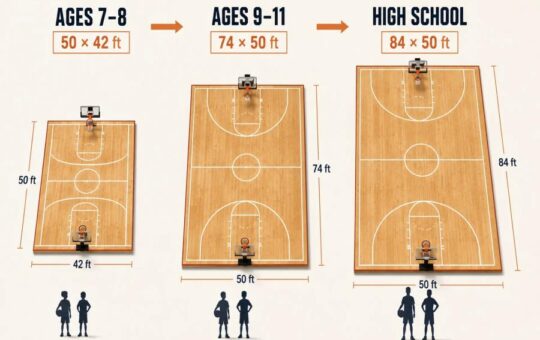
Drills should be selected by the skill level of the players and not by their age. USA Basketball implements a progressive development model which includes developmental, introductory, advanced and performance stages. This way, kids can master each skill before attempting more complex actions.
Most of all, keep the practice positive. The best basketball drills for kids focus on improving their skills and developing a sense of confidence and basketball interest.
What Are the Best Basketball Drills for Kids?
The best basketball drills for kids include stationary dribbling, red light-green light, dribble tag, cone control, partner passing, wall passing, form shooting, layup practice, defensive slides, rebounding, and small-sided games.
These activities develop the core skills children need:
- Ball control
- Passing accuracy
- Shooting technique
- Footwork
- Defense
- Communication
- Decision-making
- Teamwork
The drills should be short, active, and easy to understand.
Best Basketball Drills for Kids Fact Table
| Fact | Quick Answer |
| Main purpose | Teach basketball fundamentals through active practice |
| Recommended experience | Beginner to intermediate |
| Ideal drill length | 3 to 8 minutes |
| Main skills | Dribbling, passing, shooting, defense, and teamwork |
| Equipment | Basketballs, cones, hoops, and open space |
| Best group size | One player to a full youth team |
| Practice style | Short instructions followed by active repetitions |
| Coaching focus | Technique, effort, safety, and confidence |
| Good practice length | About 30 to 60 minutes based on age and experience |
| Main goal | Help children enjoy basketball while improving |
The best basketball drills for kids do not require complex equipment. A ball, a hoop, a few cones, and a safe playing area are enough for most activities.
Why Basketball Drills Matter for Young Players
Children get better by practice. But repeatedly doing the same thing can lead to diminishing attention and effort. The way to do that is to have a number of short drills that focus on related skills.
There are three key benefits of the best basketball drills for kids.
They increase the amount of ball handling that children get, first. The more frequently players dribble, pass, catch and shoot, the sooner they learn.
Second, drills set forth clearly defined learning objectives. Child knows what to enhance in each activity.
Third: Structured practice facilitates tracking of progress. Coaches can observe if players are becoming more in control, accurate, balanced and confident.
The Jr. NBA instructional program stresses on developing basic skills and incorporates drills that do not always require the player to be stationary but rather begin from movement or unpredictable actions. This helps young players to relate basic technique to the game.
How to Choose the Best Basketball Drills for Kids
The best basketball drills for kids should match the players’ current ability. A drill that is too easy may become boring. A drill that is too difficult may cause frustration.
Use these four questions before choosing an activity:
- Can players understand the instructions quickly?
- Can every child stay involved?
- Does the drill teach one clear skill?
- Can the activity be adjusted for different ability levels?
Start with basic movements. Add speed, defenders, competition, or decision-making only after players show control.
For beginners, success may mean dribbling without losing the ball. For more experienced children, success may mean changing direction while reading a defender.
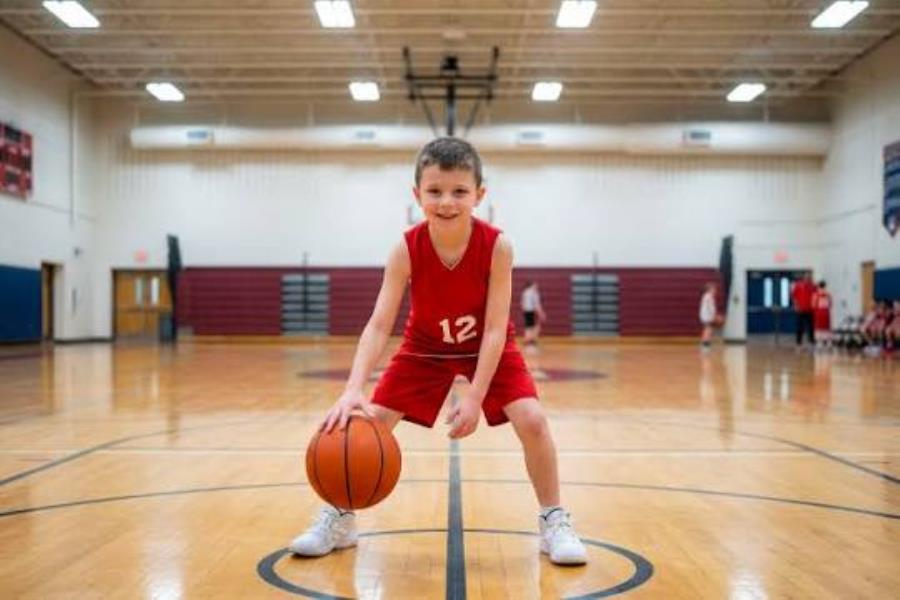
Best Basketball Drills for Kids to Improve Dribbling
Dribbling is one of the first skills young players should learn. Children need to control the ball with either hand while keeping their eyes up.
1. Stationary Pound Dribbling
Stationary pound dribbling is one of the best basketball drills for kids who are learning ball control.
How to do it
Give every player a basketball. Ask them to stand with their feet slightly wider than shoulder width. They should bend their knees and dribble the ball beside one foot.
Complete:
- 20 right-hand dribbles
- 20 left-hand dribbles
- 20 low dribbles
- 20 waist-high dribbles
Players should use their fingertips rather than striking the ball with a flat palm.
Coaching tips
Tell players to keep their heads up. Ask them to look at the coach instead of staring at the ball.
You can hold up fingers and ask players to call out the number while they continue dribbling.
2. Red Light, Green Light
Red light-green light is one of the best basketball drills for kids because it combines listening, movement, and ball control.
How to do it
Players line up along the baseline with a basketball.
Use these commands:
- “Green light” means dribble forward.
- “Yellow light” means move slowly.
- “Red light” means stop under control.
- “Reverse” means change direction.
A player who loses control returns to the last marked line instead of leaving the game.
Skills developed
This drill teaches speed control, stopping, balance, and awareness.
3. Cone Dribbling Course
A cone course is another of the best basketball drills for kids who need to practice changing direction.
Place five to eight cones in a straight or zigzag pattern. Players dribble around each cone without touching it.
Encourage players to:
- Stay low
- Use the outside hand
- Change hands near each cone
- Keep the ball close
- Look forward when possible
Beginners can walk through the course. Experienced players can increase speed or use crossover dribbles.
4. Dribble Tag
Dribble tag turns ball handling into a competitive game. That makes it one of the best basketball drills for kids who lose focus during standard dribbling practice.
Every player has a ball. One or two players act as taggers. Everyone must continue dribbling while moving inside a marked area.
When tagged, a player completes five controlled dribbles with each hand before returning.
Keep the playing area large enough to prevent collisions.
Read Also: How to Make Every Shot You Take TSHouseBasketball: A Practical Shooting Guide
Best Basketball Drills for Kids to Improve Passing
Passing teaches teamwork and helps children understand spacing. Young players should learn to pass with control instead of throwing the ball as hard as possible.
5. Partner Chest Passing
Partner passing is one of the best basketball drills for kids at every beginner practice.
Place players in pairs about six feet apart. Each pair completes 10 chest passes.
Teach players to:
- Step toward the target
- Extend both arms
- Aim for the partner’s chest
- Finish with thumbs pointing down
- Show ready hands when receiving
Move players farther apart when they can pass accurately.
6. Partner Bounce Passing
The bounce pass is useful when a defender blocks a direct passing lane.
Players work in pairs. They aim for the ball to hit the floor about two-thirds of the distance toward the receiver.
This is one of the best basketball drills for kids because it develops passing touch and target awareness.
Do not allow players to throw the ball straight down. The pass should travel forward after hitting the floor.
7. Wall Passing Challenge
Wall passing works well when a child practices alone. It also belongs among the best basketball drills for kids because it needs little space.
Mark a target on a safe wall with tape. The player makes:
- 20 chest passes
- 20 bounce passes
- 10 right-hand passes
- 10 left-hand passes
The player should catch the return pass with both hands and maintain balance.
Best Basketball Drills for Kids to Improve Shooting
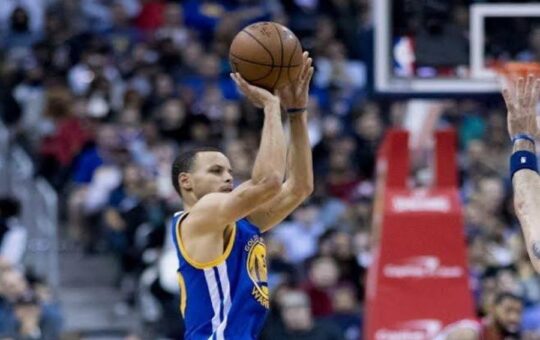
Young players often try to shoot from too far away. This can cause poor technique. Start near the basket and focus on balance, hand position, and follow-through.
8. Form Shooting
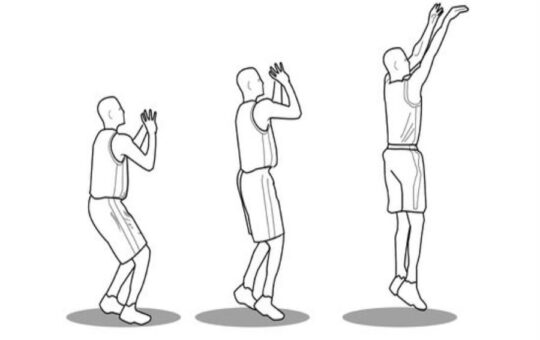
Form shooting is one of the best basketball drills for kids because it teaches correct movement before adding distance.
Players stand close to the basket. They use one hand to guide the shooting motion while the other hand supports the side of the ball.
Focus on:
- Balanced feet
- Bent knees
- Elbow under the ball
- Eyes on the target
- Full arm extension
- Relaxed wrist follow-through
Players should make several close shots before stepping back.
9. Around-the-Basket Shooting
Around-the-basket shooting is among the best basketball drills for kids who need confidence near the rim.
Mark five spots around the basket. A player must make one shot from each position.
Keep the spots close enough for the child to use proper form. Players should not move farther away until they can shoot without pushing the ball from the chest.
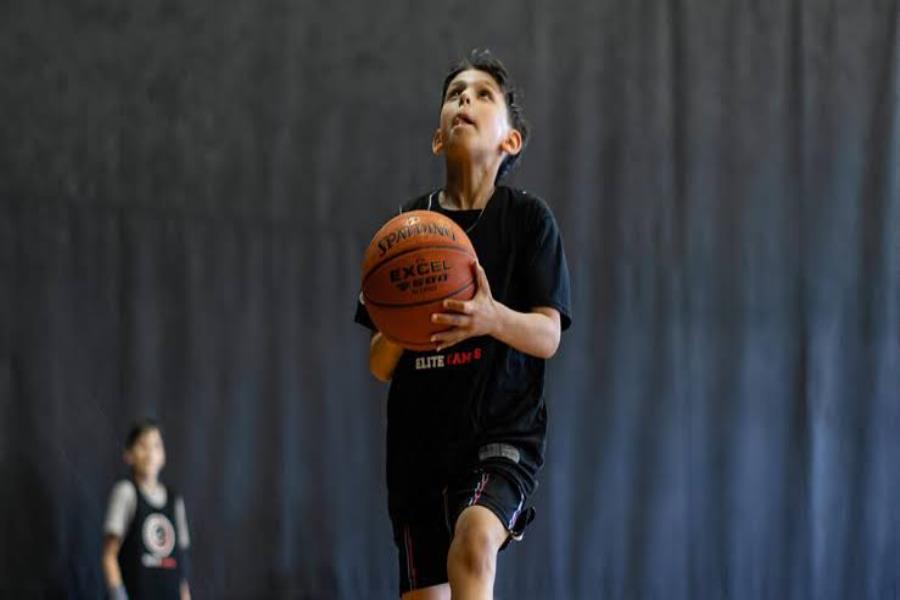
10. Layup Footwork Drill
Layups require rhythm and timing. Breaking the movement into smaller steps makes learning easier.
For a right-side layup:
- Step with the right foot.
- Step with the left foot.
- Jump from the left foot.
- Lift the right knee.
- Shoot with the right hand.
Reverse the pattern on the left side.
This is one of the best basketball drills for kids because it teaches coordination without requiring full speed.
Allow beginners to practice the steps without a ball first.
11. Beat the Coach Shooting Game
Beat the coach adds simple competition to shooting practice.
A player earns one point for every made close-range shot. The coach earns one point for every missed shot. The first side to five points wins.
It is one of the best basketball drills for kids because players feel pressure while still taking shots from a suitable distance.
Avoid using difficult shots only to help the coach win. The goal is to encourage focus and sound technique.
Best Basketball Drills for Kids to Improve Defense
Defense starts with stance, balance, and effort. Children should learn to move without crossing their feet.
12. Defensive Slide Drill
Defensive slides are one of the best basketball drills for kids learning how to stay in front of an opponent.
Players begin in a low stance with:
- Feet wider than shoulder width
- Knees bent
- Chest up
- Hands active
- Weight balanced
The coach points left or right. Players slide in that direction while keeping their feet apart.
Run the activity for 15 to 20 seconds. Allow a short rest before repeating.
13. Mirror Drill
The mirror drill pairs two players. One player leads while the other copies the movement.
The leader slides left, right, forward, or backward within a small area. The defender attempts to stay directly in front.
The mirror game is one of the best basketball drills for kids because it develops reaction speed without physical contact.
Change leaders every 20 to 30 seconds.
14. Closeout and Stop Drill
A closeout happens when a defender moves toward a player who receives the ball.
Place one player near the basket and another on the perimeter. The defender starts in the paint. On the coach’s signal, the defender runs toward the outside player and finishes with short steps and raised hands.
This activity is one of the best basketball drills for kids who already understand basic defensive stance.
Teach players to slow down before reaching the offensive player. Running too close can make it easy for the attacker to dribble past.
Best Basketball Drills for Kids to Improve Rebounding
Rebounding is more than jumping. Players must locate the ball, create space, and secure possession with two hands.
15. Hit, Find, and Get
Hit, find, and get is one of the best basketball drills for kids who need to learn rebounding habits.
Teach the sequence:
- Hit: Make safe body contact with the opponent.
- Find: Turn and locate the ball.
- Get: Jump and secure the ball with both hands.
Use light contact and close supervision. Do not encourage pushing, grabbing, or unsafe collisions.
After catching the ball, the player should bring it close to the chest and maintain balance.
Small-Sided Games for Young Players
Drills teach technique, but children also need opportunities to make decisions. Small-sided games such as one-on-one, two-on-two, and three-on-three create more touches and choices than a crowded full-court game.
USA Basketball introduced its 3X Play initiative in March 2026 to help youth programs use age- and skill-adapted 3×3 activities for player development.
Small-sided games are some of the best basketball drills for kids because they connect skills with realistic situations.
Useful small-sided rules
Try these simple conditions:
- Every player must touch the ball before a shot.
- A team earns an extra point for a successful pass.
- Players may use only three dribbles.
- A basket counts only after a change of direction.
- The offense must make one cut before shooting.
Rules should support learning. They should not make the game confusing.
Basketball Drill Meanings Across Coaching Platforms
Different coaching platforms may describe similar drills with different names. The purpose often remains the same.
| Drill term | Common meaning | Example activity |
| Ball-handling drill | Activity designed to improve dribbling control | Stationary pound dribbles |
| Skill station | Small practice area focused on one technique | Passing station |
| Small-sided game | Game with fewer players than standard basketball | Three-on-three |
| Form shooting | Close-range shooting focused on technique | One-hand shots near the rim |
| Closeout drill | Defensive movement toward a player with the ball | Sprint and short-step finish |
| Finishing drill | Practice for scoring near the basket | Right- and left-hand layups |
| Footwork drill | Activity focused on balance and movement patterns | Jump stops and pivots |
| Reaction drill | Activity requiring a response to a signal | Coach-point defensive slides |
These terms help coaches organize the best basketball drills for kids into clear practice categories.
Example Drill Plan by Age and Skill Level
The following table provides a simple starting point. Coaches should adjust the plan based on player experience, space, and attention span.
| Player group | Main focus | Example drills | Suggested drill time |
| Ages 5–7 | Movement and basic control | Red light-green light, stationary dribbling, close shooting | 3–5 minutes |
| Ages 8–10 | Fundamentals and coordination | Cone dribbling, partner passing, layup steps | 4–7 minutes |
| Ages 11–13 | Technique and decision-making | Dribble tag, closeouts, two-on-two games | 5–8 minutes |
| Intermediate players | Game application | Three-on-three, reaction drills, passing under pressure | 6–10 minutes |
| Mixed-skill teams | Confidence and participation | Stations with easier and harder options | 4–8 minutes |
The best basketball drills for kids can be adjusted without changing the main goal. Move the cones closer, reduce the speed, use a smaller area, or remove defenders for beginners.
Sample 45-Minute Youth Basketball Practice
A clear practice plan keeps children moving and reduces wasted time.
| Time | Activity | Purpose |
| 0–5 minutes | Dynamic warm-up | Prepare the body |
| 5–12 minutes | Stationary and moving dribbling | Improve ball control |
| 12–19 minutes | Partner passing | Improve accuracy and catching |
| 19–27 minutes | Form shooting and layups | Develop scoring technique |
| 27–34 minutes | Defensive slides and mirror drill | Improve defensive movement |
| 34–42 minutes | Two-on-two or three-on-three | Apply skills in a game |
| 42–45 minutes | Review and free throws | Reinforce learning |
This schedule combines several of the best basketball drills for kids without spending too long on one activity.
School-aged children and adolescents should generally receive at least 60 minutes of moderate-to-vigorous physical activity each day. Activities should be varied, enjoyable, and suitable for their age. Basketball practice can contribute to that total.
How to Make Basketball Practice More Fun
Fun does not mean removing instruction. It means presenting skills in a way that keeps children active and interested.
The best basketball drills for kids often include a challenge, target, partner, or simple game.
Add small challenges
Ask players to beat their own score instead of comparing them with the strongest player.
Examples include:
- Most controlled dribbles in 30 seconds
- Most target passes without a drop
- Most close shots made out of 10
- Fastest controlled cone course
- Longest dribbling streak with eyes up
Use team goals
A group might try to complete 30 accurate passes or make 20 close-range shots together.
Team targets encourage communication. They also reduce pressure on individual children.
Keep lines short
Long lines reduce activity and create distractions. Use small groups, several baskets, or multiple stations whenever possible.
When equipment is limited, give waiting players a movement task such as footwork practice or ball-control repetitions.
Read Also: Lando Norris Height: Complete Guide to His Height, Biography, Career and F1 Facts
Celebrate effort and improvement
Praise specific actions.
Instead of saying “good job,” say:
- “You kept your eyes up.”
- “That was a balanced stop.”
- “You stepped toward your pass.”
- “You used your left hand.”
- “You moved into open space.”
Specific feedback helps children understand what they did well.
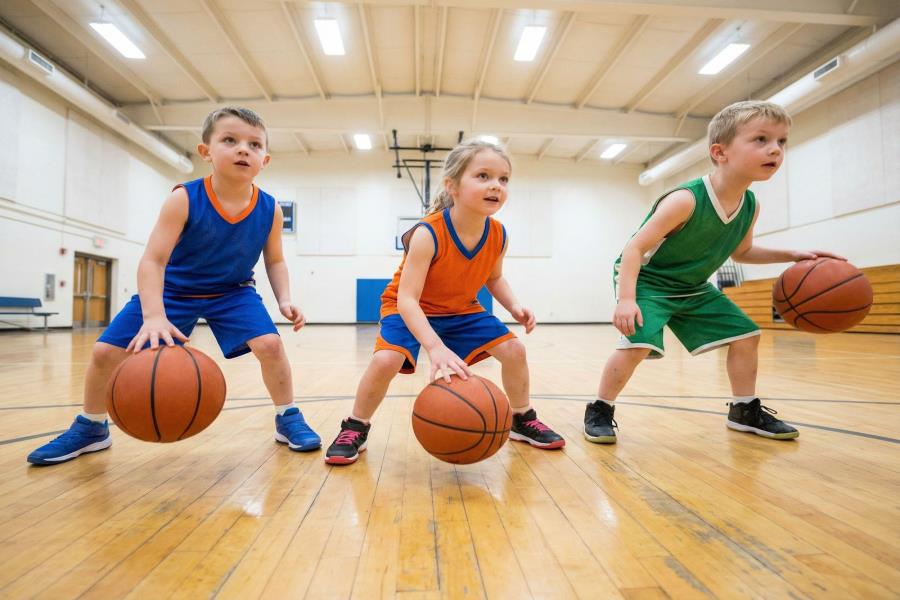
Common Mistakes Coaches Should Avoid
Even the best basketball drills for kids may fail when the practice setup is poor.
Giving long explanations
Children learn by doing. Demonstrate the action quickly and let players begin.
Stop the drill only when a correction will help the whole group.
Using drills that are too difficult
Do not begin with advanced crossovers, long shots, or complicated plays before players control basic movements.
Build one step at a time.
Eliminating players
Games that remove children after a mistake reduce practice time. Use a brief skill task before letting the player rejoin.
Focusing only on winning
Young players need skill development, confidence, and enjoyment. Winning can be part of competition, but it should not control every activity.
Ignoring both hands
Children may prefer one hand. However, each dribbling, passing, and finishing session should include right- and left-hand practice.
How Often Should Kids Practice Basketball?
Most beginners benefit from two or three structured sessions per week, along with free play. The right schedule depends on age, experience, health, school demands, and interest.
A short focused session may be more useful than a long practice where the child becomes tired or distracted.
Use the best basketball drills for kids for 20 to 45 minutes during home practice. Include rest breaks and water access. Stop when technique falls apart because of fatigue.
Parents and coaches should avoid pressuring children to train through pain. Persistent pain or an injury concern should be assessed by a qualified healthcare professional.
Equipment Needed for Kids’ Basketball Drills
Most activities require only basic equipment.
| Equipment | How it helps |
| Age-appropriate basketball | Makes control and shooting easier |
| Adjustable hoop | Allows proper shooting form |
| Cones or floor markers | Defines routes and playing areas |
| Athletic shoes | Supports safe movement and stopping |
| Water bottle | Supports hydration breaks |
| Stopwatch | Times short activities |
| Tape or chalk | Creates passing targets and boundaries |
You can still use the best basketball drills for kids without a full court. Dribbling, wall passing, footwork, and ball-control activities can be completed in a small safe area.
Social Media Links for Youth Basketball Resources
The following are official accounts that share youth basketball information, drills, events, and instructional content.
| Platform | Official resource | Valid link |
| Website | Jr. NBA/Jr. WNBA | Visit Jr. NBA |
| Jr. NBA/Jr. WNBA | Follow @jrnba | |
| Jr. NBA/Jr. WNBA | Visit Jr. NBA on Facebook | |
| X | Jr. NBA/Jr. WNBA | Follow @jrnba |
| YouTube | Jr. NBA/Jr. WNBA | Watch Jr. NBA |
| Website | USA Basketball | Visit USA Basketball |
| USA Basketball | Follow @usabasketball | |
| USA Basketball | Visit USA Basketball on Facebook | |
| X | USA Basketball | Follow @usabasketball |
| YouTube | USA Basketball | Watch USA Basketball |
Parents should supervise younger children’s use of websites and social media platforms.
Tips for Practicing Basketball at Home
The best basketball drills for kids at home should match the available space.
In a driveway, players can practice dribbling, cone movement, shooting, and layups.
Inside a safe room, they can practice:
- Ball wraps
- Finger taps
- Stationary dribbling with enough clearance
- Pivot footwork without a ball
- Passing form with a soft ball
- Defensive stance and slides
Remove breakable objects and avoid dribbling where the floor, furniture, or nearby people could be damaged.
A child can choose three of the best basketball drills for kids and complete each one for five minutes. This creates a useful 15-minute session.
Read Alos: A’ja Wilson Age: The Real Number Behind Her Record-Breaking Career
Final Thoughts
The best basketball drills for kids teach fundamentals through movement, repetition, and simple challenges. Start with dribbling, passing, shooting, footwork, defense, and rebounding. Then use small-sided games to help players apply those skills.
Keep instructions brief. Give every player frequent touches. Adjust each activity based on ability rather than expecting every child to progress at the same speed.
Above all, the best basketball drills for kids should help children feel successful. When practice is active, safe, and encouraging, young players are more likely to improve and continue enjoying the game.
FAQs
What are the best basketball drills for kids?
The best basketball drills for kids include dribbling games, partner passes, form shooting, layup practice, defensive slides, rebounding, and small-sided games.
What basketball drill should a beginner learn first?
Stationary dribbling is a good first drill because it teaches ball control, balance, hand position, and confidence.
How long should a basketball drill last?
Most youth drills should last about three to eight minutes. Change activities before players lose focus or technique.
How can children improve dribbling quickly?
Children should practice with both hands, stay low, use their fingertips, keep the ball close, and gradually increase speed.
What are fun shooting drills for children?
Form shooting, around-the-basket shooting, beat-the-coach, and spot challenges make close-range shooting active and enjoyable.
How can coaches keep every child involved?
Use small groups, multiple stations, short lines, one ball per player when possible, and activities that do not eliminate players.
Are competitive basketball drills good for children?
Yes. Simple competition can improve focus when the rules remain fair and skill development matters more than winning.
Can basketball drills be done without a hoop?
Yes. Children can practice dribbling, passing, catching, pivots, defensive slides, footwork, balance, and reaction skills without a hoop.
How many days a week should kids practice basketball?
Many beginners can practice two or three times weekly. The schedule should also allow rest, schoolwork, free play, and other activities.
What makes a basketball drill age-appropriate?
An age-appropriate drill uses simple instructions, suitable equipment, manageable distances, safe movement, and goals that match the child’s ability.