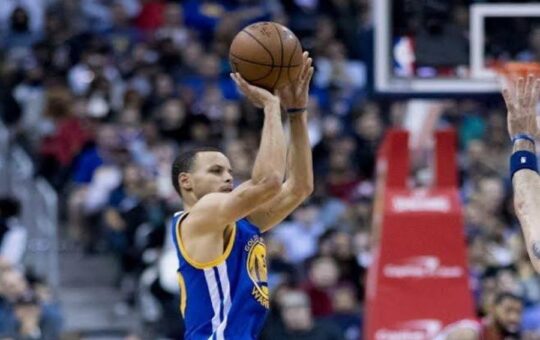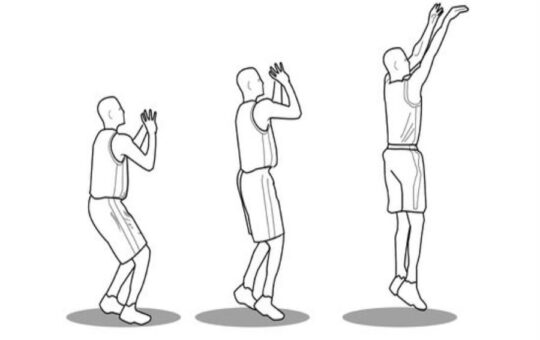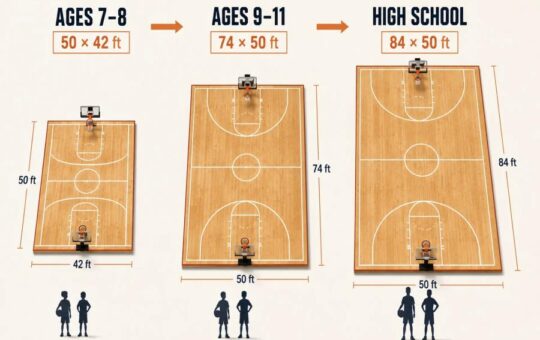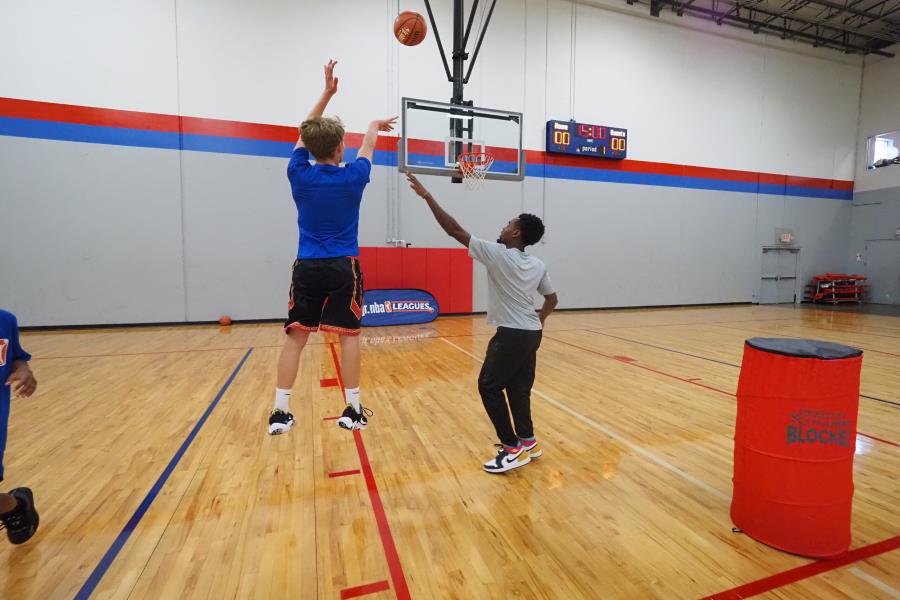
A basketball player will stand by the free-throw line with no one else in the lane when taking a shot from the free-throw line.When a player takes a shot from the free-throw line, they will stand alone at the line while the other players wait around the lane. But what is a free throw in basketball? A free throw is a shot taken by a player without any one defending him after certain fouls. The player makes a shot from behind the basket line with no defender directly in front of him or her. One point will be awarded for every successful free throw. Free throws may seem easy but are an important aspect of basketball strategy as it gives a chance to alter the score without a field goal.
What Is A Free Throw in Basketball?
A free throw is an opportunity to score one point that is awarded when a player commits a foul. Standard basketball courts have a line 15 feet from the backboard that the shot is taken from.
The shooter is given a certain amount of time to attempt the shot. Other players, typically line up along the key or behind the three-point line, as per the rules and situation.
The main idea is simple:
In basketball, a free throw is a type of shot that is taken when a player is given an unobstructed chance to score a point from a designated spot.
The shooter does not have an opponent directly in front of them (as in a regular field-goal play).
Free Throw Quick Answer
| Question | Answer |
| What is a free throw? | An uncontested one-point shot awarded after certain fouls |
| Where is it taken? | From the free-throw line |
| How many points is it worth? | 1 point |
| Can a free throw be defended? | No defender directly guards the shooter |
| When is it awarded? | After specific personal or team fouls |
| Who takes it? | Usually the player who was fouled |
| Is every foul followed by free throws? | No |
Why Is It Called A Free Throw?
In the game, the thrower of a free throw has a clear shot at making the shot because the arc is not blocked.
The player need not dribble past an opponent or move away from the opponent to make the shot. They just take the ball from the referee and shoot from their line.
But free doesn’t mean automatic.
It’s still up to the player to make the shot.
Pressure, fatigue, crowd noise and game situation/shooting technique can all impact a free throw. That is why it is a crucial skill in basketball to be able to make a free throw.
How Does A Free Throw Work?
The basic free throw procedure is easy.
- A qualifying foul occurs.
- Free throws are awarded based on the officials’ decision.
- The appropriate player goes to the free-throw line.
- The shooter is given the ball by the official.
- The shooter takes another shot at the basket from the foul line.
- Players can get to specific positions on the lane as necessary.
- The ball is in play after the attempt, following the rules that apply.
When the shot goes in the basket, the team gets one point.
When a shot goes out of bounds, it is dependent on the number of free throws that are still attempted, and the rules that are in effect.
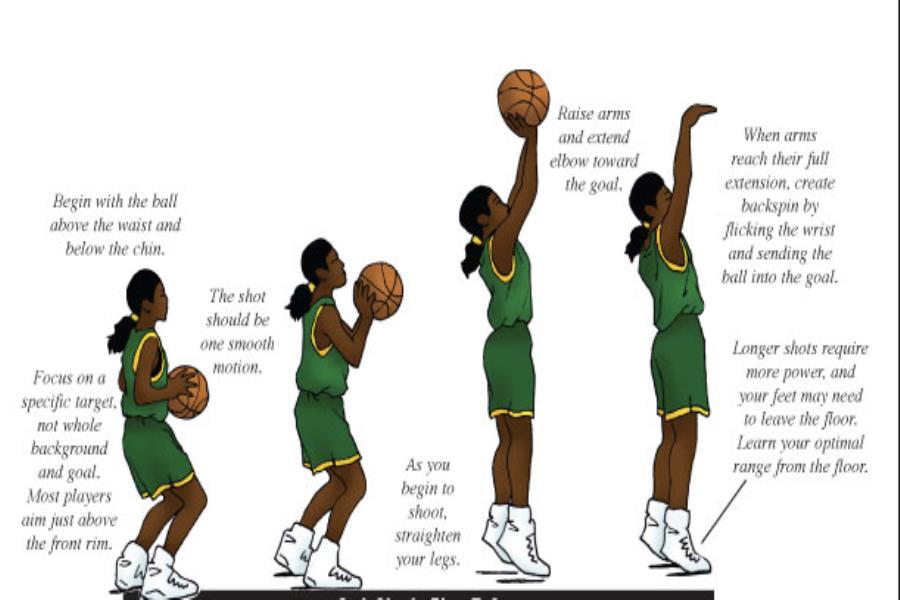
Free throws are not just easy to shoot; this is one of the reasons. Shooter must be familiar with the shooting form and rules of the attempt.
How Many Points Is A Free Throw Worth?
One successful free throw is worth one point.
This is not a field goal attempt.
If the ball is shot from within the 3-point line, it is scored as a regular shot (worth 2 points). If the shot is made from outside the 3-point arc, it will be given three points. A free throw is worth one point each
| Type of Basketball Shot | Points |
| Free throw | 1 |
| Two-point field goal | 2 |
| Three-point field goal | 3 |
For instance, if a player makes three consecutive free throws, his or her team scores three points.
That might seem insignificant. Close matches can mean a lot with those points.
Read Also: Youth Basketball Size: The Simple Guide That Helps You Pick The Right Ball
When Are Free Throws Awarded?
Usually, a foul is called on a player when he or she is fouled under the rules’ conditions, allowing the player to shoot the ball from the foul line.
A shooting foul is one that is commonly used.
Suppose a player runs toward a basketball and starts a shooting motion. A defender attempts to make a physical contact with the shooter that is illegal. The shooter may be awarded free throws, depending on the situation.
Free throws are also issued due to a team fault situation.
The number of free throws awarded varies according to the type of foul, whether the player is shooting, the team foul situation and the basketball rules in play.
That’s vital because not all basketball fouls are fouled with a free throw.
For instance, some non-shooting fouls may allow a throw-in instead of free throw when no penalty is called.
What Is A Shooting Foul?
When a defending player makes illegal contact with an attacking player when he/she is trying to shoot a ball, it is a shooting foul.
Free throw(s) can be made under the relevant rules if the shot is missed.
In what is often referred to as an “and-one,” if the player makes the shot, the basket will count and another free throw shot will be given.
In basketball, what is an “and-One”?
An and-one is awarded if a player is fouled during play and they make a field goal, and then they get an extra free throw.
For example:
Player driving towards basket.
The player is fouled by a defender.
The player continues to shoot the two-point shot.
The basket is worth 2 points.
The player next gets one free throw.
If the free throw is made, the play earns three points.
That is why it is possible to read “and-one” on a basketball game.
A free throw line is the area where an athlete must take a free throw.
What Is A Free Throw Line?
In conventional basketball, the free-throw line is 15 feet away from the plane of the backboard.
The line is within the key/free throw lane area.
A certain positioning must be followed during the attempt. The shooter also has to not violate the “free throw” rules.
One of the most frequent offenses is when someone steps on or over the free throw line while the ball is in motion toward the basket.
What Happens During A Free Throw?
Typically, the shooter is behind the free throw line during a free throw.
The player is given the ball by the official.
The shooter is then given a certain amount of time to try to make the shot.
There can be other players in their lane positions. They aren’t able to just go wherever they please. The rules regulate where players may stand and when they may enter some areas.
Its purpose is to maintain an organized attempt and to ensure that the players don’t get an advantage.
The thrower throws the ball into the basket.
The team gets one point if it goes in.
If it fails to hit, then what is to follow depends on the circumstances.
Free Throw Rules You Should Know
What is a free throw in basketball rules? Some basketball organizations may have rules that are different for free throws. There are rules books for the NBA, NCAA and for basketball abroad.
Nevertheless, there are a few basic principles shared above.
1. The Shooter Must Stay Behind the Line
The shooter may not step on or over the free-throw line or the free throw line until the ball has touched the rim or until it has passed into the basket per regulation.
2. The Shooter Has Limited Time
The shooter is not allowed to stand at the line without shooting for an unlimited amount of time. A time limit applies.
3. Players Must Follow Lane-Position Rules
The players placed around the key need to stay where they are until the ball is released.
4. The Ball Must Reach the Basket
A free throw is an actual shot. The player attempting to shoot cannot just hold the ball or purposefully slow down the action.
5. Violations Can Affect the Result
A player is allowed to commit a free throw violation. Defensive players may also break the rules in an attempt.
Depending on the violation, the appropriate result shall be determined by the official.
Free Throw vs Field Goal
A free throw and a field-goal are both points scored in basketball, but for different reasons.
| Feature | Free Throw | Field Goal |
| Typical reason | Awarded after qualifying fouls | Normal offensive shot |
| Defensive pressure | No direct defender on shooter | Defender may contest |
| Points | 1 | 2 or 3 |
| Location | Free-throw line | Anywhere within the playing area |
| Dribbling required | No | Not necessarily |
| Common example | Shooting foul | Jump shot or layup |
This difference is what makes it easier to score basketballs.
Free Throw vs Three-Point Shot
Both of these shots are significantly different.
A three-point shot is when a ball is thrown from behind the three-point arc. Successful = 3 points.
A free throw is given one point.
A three-point shot can be a tricky one. The free throw is a shot made from a stationary position with no one there to interfere with it.
| Free Throw | Three-Point Shot |
| Worth 1 point | Worth 3 points |
| Taken from free-throw line | Taken behind three-point line |
| Usually uncontested | Can be contested |
| Often awarded after a foul | Usually a normal field-goal attempt |
| Requires a set shooting routine | Can be taken during live play |
Why Are Free Throws Important in Basketball?
Why free throws are important: they give teams a shot at scoring without having to attempt a normal field goal.
A shooter can be fouled and then be awarded an additional free throw.
Free throws are also vital at the end of the game.
Players can sometimes intentionally foul other players to attempt to stop the clock when it is close. This can go to the OTHERS’ free throw line.
That makes an important strategic component.
Under pressure, a team might have to rely on a team member to make a free throw to hold off a lead. A team in the deficit could not only have to make free throws, but also look to score and create more opportunities to score.
What Is Free-Throw Percentage?
Free throw percentage is a percentage that defines how consistent a player is in shooting free throws.
The simple formula is:
Free Throw Percentage = Free Throws made/total number of free throws taken x 100
If, for instance, the player makes 8 or more free throws from 10 attempts, then the player is considered to be making 80% of their shots from the free throw line.
8 ÷ 10 × 100 = 80%
So, the player’s free-throw percentage is 80%.
Free-Throw Percentage Example
Free-Throw Percentage Example
| Free Throws Made | Attempts | Free-Throw Percentage |
| 7 | 10 | 70% |
| 8 | 10 | 80% |
| 9 | 10 | 90% |
| 15 | 20 | 75% |
Usually a player’s shooting skills are characterized by free-throw percentage.
It’s helpful because it targets a certain skill, not shooting the ball.
How Can Basketball Players Improve Free Throws?
Free-throw shooting is based heavily on consistency.
Players tend to get into a routine before taking each shot.
That routine could involve:
- Breathing the same number of breaths.
- Using the same number of dribbles
- Having the feet set in the same position.
- Effort to concentrate on the goal
- Controlling the shooting movement
The idea isn’t to make all of the attempts look theatrical.
The idea is to repeat the shooting action.
Players can also get in their free throw practice while fatigued. This is important because when the ball is thrown in a late game, when players are tired both physically and mentally, they tend to miss free throws. .
What Is A Technical Free Throw?
Under rules, technical fouls may give rise to free throw point(s).
Usually a technical foul will be an illegal physical contact which is somewhat different from the normal illegal physical contact. These may be some unsportsmanlike conduct or violations of the rules.
The penalty will vary by the basketball organization.
The other reason is that it’s helpful to be able to differentiate between a shooting foul, a personal foul, a team foul and a technical foul.
They are not always consistent.
What Is A Free Throw In Different Basketball Contexts?
For the most part, the meaning of the phrase is the same in all basketball environments, although the rules may vary from organization to organization.
| Basketball Context | Meaning | Example |
| NBA | One-point penalty shot awarded under NBA rules | A player is fouled while shooting |
| NCAA | One-point shot awarded under college rules | A qualifying team foul creates a bonus situation |
| International basketball | One-point shot under FIBA rules | A shooting foul results in free throws |
| Youth basketball | Usually a one-point foul shot | A player is fouled during a shot |
| Casual basketball | Often used informally | Players may agree on foul-shot rules |
Always check with the rules being used the number of times and the number of penalty situations.
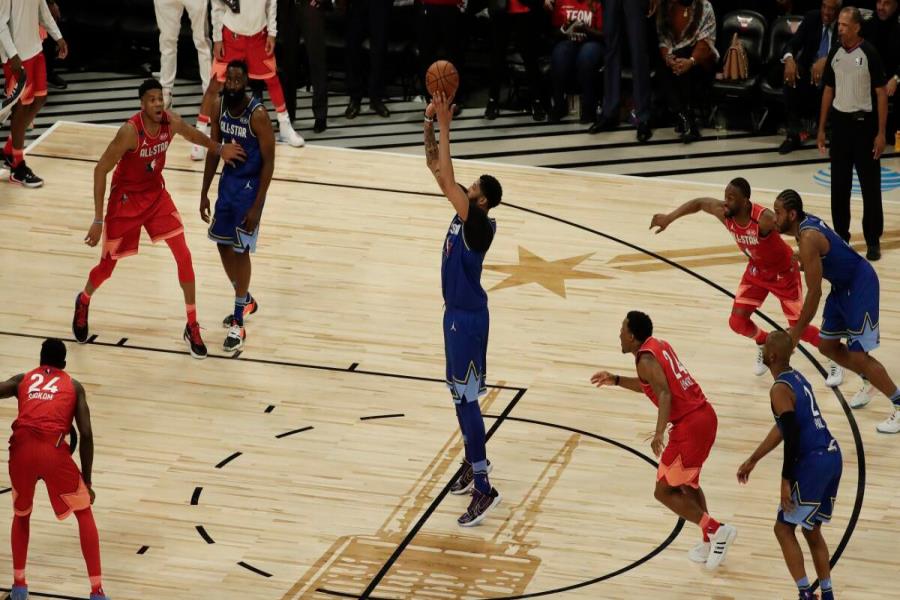
Structured Bio: Free Throw Overview
Normally, a term like “bio” would be used for people, but a basketball term does not have a personal biography. The following table is provided for reference only and for the purposes of searching.
| Attribute | Free Throw |
| Term | Free throw |
| Sport | Basketball |
| Category | Scoring play |
| Point value | 1 point |
| Shooting location | Free-throw line |
| Main purpose | Penalty scoring opportunity |
| Direct defender | No |
| Common cause | Certain fouls |
| Related terms | Foul shot, foul free throw, free-throw attempt |
| Main statistic | Free-throw percentage |
| Common abbreviation | FT |
| Example | A player is fouled while shooting and receives free throws |
Physical Appearance Table
A free throw is not a person or object, but a basketball action. So, things like height, weight or looks are irrelevant.
| Physical Attribute | Free Throw |
| Height | Not applicable |
| Weight | Not applicable |
| Body type | Not applicable |
| Appearance | Not applicable |
| Physical form | Basketball shooting action |
| Location | Free-throw line |
| Equipment | Basketball and hoop |
Any physical build is OK for the player who takes the free throw. The main elements are the rules of the attempt and the player’s shooting technique.
Net Worth Overview Table
A free throw is not a person, business or financial asset. It thus does not have a net worth of its own.
| Financial Attribute | Free Throw |
| Net worth | Not applicable |
| Salary | Not applicable |
| Earnings | Not applicable |
| Market value | Not applicable |
| Financial category | Basketball scoring action |
The idea of free throw is unrelated to a player’s salary or the worth of a basketball team.
Meanings Across Platforms With Examples
What is a free throw in basketballThe term “free throw” can have several meanings in basketball. The meaning is the same, but the terms used may differ for various platforms.
| Platform or Context | Meaning | Example |
| TV broadcast | A penalty shot after a foul | “He will shoot two free throws.” |
| Sports website | A statistical scoring opportunity | “The guard went 6-for-7 from the free-throw line.” |
| Basketball app | A recorded scoring event | “FT: 2/2” |
| Social media | A short reference to foul shooting | “She hit both free throws.” |
| Coaching discussion | A skill that needs practice | “Work on your free-throw routine.” |
| Fan conversation | A scoring chance | “They missed two free throws late.” |
Common Free-Throw Terms
Here are some terms that are related to basketball that will make the game easier to understand when reading the report.
Free-throw attempt (FTA): A chance to attempt a free throw.
Free-throw percentage: Percentage of free throws made.
Free-throw line: The line that a free throw is taken from.
And-one: Field goal made followed by a free throw awarded due to a qualifying foul.
Bonus: A team foul situation that can result in free throws.
Shooting foul: Any contact with a player that is not legal during shooting.
Technical foul: A violation of the rules which may result in a free throw.
Read Also: Passing in Basketball: The Complete Guide to Better Team Play
Final Thoughts
So, what is a free throw in basketball? One of the easiest basketball concepts to grasp once you are aware of the basic rule is a free throw.
Simply put, a free throw is a shot from a spot that is taken after specific types of fouls, for which the shooter is not fouled, and the basket is empty.
The player takes a shot from the free-throw line. No defender is in front of the shot. Each successful attempt will give the team a point.
Free throws also play a significant statistical part. Free-throw percentage is a measure of how well a player takes advantage of them.
Free throws also help to explain some other concepts like shooting foul, bonus, and-one, free throw attempt, and FT%.
The next time a referee sends a player to the line you will understand what’s happening. The player has an opportunity to shoot and score without someone directly blocking him/her from the shot. That’s one opportunity that can mean the difference in a tight game of basketball.
FAQs:
What is a free throw in basketball?
A free throw is an uncontested one-point shot awarded to a player after certain fouls. The attempt is taken from the free-throw line.
How many points is a free throw worth?
A successful free throw is worth one point.
Is a free throw a field goal?
No. A free throw is a separate type of scoring attempt. Field goals are worth two or three points depending on where the shot is taken.
Why do players get free throws?
Players can receive free throws after certain fouls. Shooting fouls are one common reason. Team foul situations and technical fouls can also result in free throws under applicable rules.
Can you miss a free throw?
Yes. A free throw is not guaranteed to go in. If the shot misses, the result depends on the number of attempts and the applicable rules.
Who takes a free throw?
In many situations, the player who was fouled takes the free throw. There are exceptions depending on the type of foul and the rules being applied.