The 2-3 zone is one of the most common defensive systems in basketball. It places two defenders near the top of the court and three defenders closer to the basket. The goal is to protect the paint, force outside shots, and make the offense work for every clean look.
A good 2-3 zone is not passive. Players must talk, move, close out, rebound, and protect gaps. When all five defenders work together, the defense can slow the game and limit easy scoring chances.
What Is a 2-3 Zone?
A 2-3 zone is a defensive formation with two players in the front line and three players in the back line. Instead of guarding one player, each defender protects a section of the court.
The two top defenders usually cover the perimeter, ball handlers, and high-post passing lanes. The three back defenders protect the wings, corners, short corners, baseline, and rim.
Quick Definition
A 2-3 zone is a basketball defense that uses two defenders across the top and three defenders near the baseline to protect the paint and force outside shots.
2-3 Zone Fact Table
| Feature | Details |
| Defensive type | Zone defense |
| Basic shape | Two defenders high and three defenders low |
| Main goal | Protect the paint and limit drives |
| Best against | Teams with weak outside shooting |
| Main weakness | Open gaps at the high post, corners, and short corner |
| Key skill | Communication |
| Rebounding demand | High |
| Common level | Youth, school, college, and professional basketball |
| Best tempo | Half-court defense |
| Main counter | Ball movement, overloads, and high-post passing |
How the 2-3 Zone Is Set Up
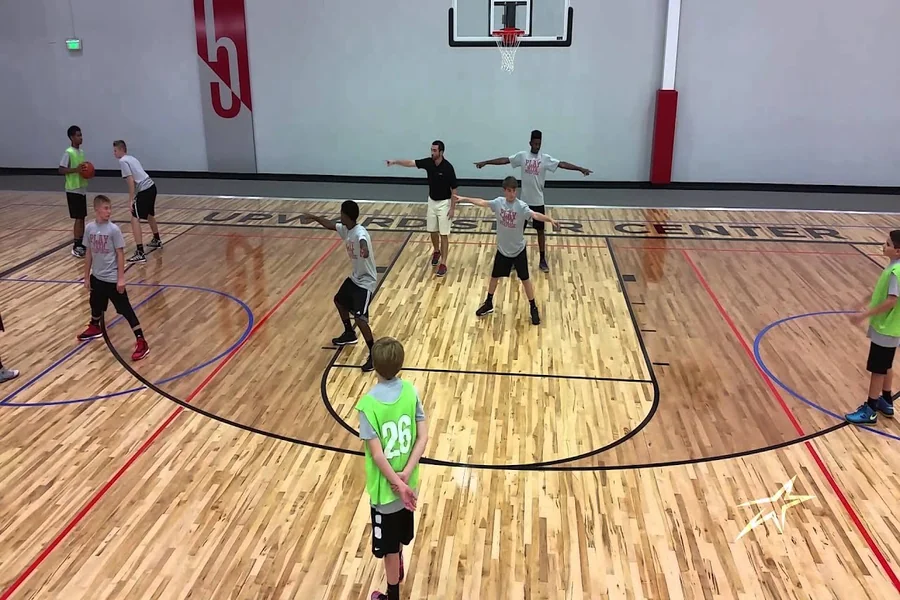
The basic 2-3 zone starts with two guards near the top of the key. Three defenders form the back line. One defender stays in the middle while the other two cover the left and right blocks.
The top players should not stand too wide. They need enough space to pressure the ball while still protecting the middle. The bottom players must stay active and ready to move toward the wing or corner.
Read Alos: A’ja Wilson Age: The Real Number Behind Her Record-Breaking Career
Player Positions in This Defense
| Position | Main Area | Main Responsibility |
| Top-left defender | Left side above the free-throw line | Pressure the ball and protect the high post |
| Top-right defender | Right side above the free-throw line | Pressure the ball and stop middle penetration |
| Bottom-left defender | Left block and corner | Cover the wing, corner, and baseline |
| Middle defender | Paint and rim | Protect the basket and control cutters |
| Bottom-right defender | Right block and corner | Cover the wing, corner, and baseline |
Main Defensive Responsibilities
Every player in the 2-3 zone must understand where to move when the ball changes sides. One late rotation can create an open shot or an easy pass near the basket.
Top Defenders
The top defenders in the 2-3 zone pressure the ball above the free-throw line. They must stop straight-line drives and prevent easy passes into the high post.
When the ball moves to one side, the nearest top defender closes out. The other top defender slides toward the middle. This helps protect the gap between the guards.
Wing Defenders
The bottom outside defenders in the 2-3 zone protect the wings, corners, and baseline. They often cover more ground than any other players.
When the ball reaches the wing, the outside defender may step up. When the ball goes to the corner, that defender closes out under control and forces the ball away from the baseline.
Middle Defender
The middle defender is the anchor of the 2-3 zone. This player protects the rim, communicates with teammates, and watches cutters moving through the paint.
The middle defender must avoid chasing the ball too far. Leaving the rim can open a pass behind the defense.
Why Teams Use the 2-3 Zone
Coaches use the 2-3 zone because it protects the lane and changes the rhythm of the game. It can also hide some one-on-one defensive weaknesses.
The system is useful when the opponent depends on drives, post touches, or cuts. It can make the offense settle for jump shots.
Main Benefits
This defensive system can:
- Protect the paint.
- Reduce direct drives.
- Help players stay out of foul trouble.
- Slow fast offensive teams.
- Force more outside shots.
- Create confusion for teams that do not move the ball well.
Main Strengths of the Defense
The biggest strength of the 2-3 zone is paint protection. Three defenders stay near the basket, which makes finishing inside harder.
It can also keep the defense compact. Players are closer to help positions and can respond to cuts or post entries.
Another strength is flexibility. A coach can make the 2-3 zone more aggressive by trapping the corners or more conservative by keeping defenders closer to the lane.
Main Weaknesses to Watch
There are obvious spaces to shoot from the 2-3 zone. Slow rotations can create open space in the high post, short corner, and deep corner.
Good shooting teams can also run the defense. When multiple defenders get to the 3 point arc, they can get too far away and leave the paint area open.
Another issue is the lack of a bounce. Players will be focusing on covering territories rather than individuals, leaving them vulnerable to cutters and weak side rebounders.
Common Open Areas
| Open Area | Why It Opens | Defensive Fix |
| High post | Top defenders split too wide | Keep one top defender near the middle |
| Corner | Bottom defender arrives late | Sprint on the pass and close out under control |
| Short corner | Middle defender stays too high | Keep the middle defender near the rim |
| Weak-side wing | Defense shifts too far | Maintain weak-side balance |
| Offensive glass | Defenders do not locate players | Find a body before chasing the ball |
How to Play This Defense Correctly
A strong 2-3 zone depends on movement. Defenders should move while the ball is moving, not after the pass arrives.
Players must also stay connected. Large gaps between defenders make it easy for the offense to pass through the defense.
1. Pressure the Ball
The nearest defender should pressure the ball without giving up a direct drive. The goal is to make the passer uncomfortable and reduce clear vision.
2. Protect the Middle
The 2-3 zone becomes weak when the ball enters the high post. The top defenders must close passing lanes while the middle defender stays ready to step up.
3. Rotate on Every Pass
Each pass should trigger a full team rotation. The on-ball defender closes out. Other players shift toward the ball while protecting the rim and weak side.
4. Talk Constantly
Players should call the ball, wing, corner, cutter, high post, and rebound. A quiet 2-3 zone usually breaks down.
5. Finish With a Rebound
A defensive stop is not complete until the team gets the ball. Every player must find an opponent and block out.
Common Zone Defense Mistakes
The most frequently made 2-3 zone play error is stagnation. Zone defense is not to stand in one place.
One of the errors is running after the ball. If two defenders are coming at one player, then another area opens up.
Bad closeouts have an impact on defense as well. A wild closeout is a drive that is allowed when a player has a closeout. If the shot is not made, it is lost due to the slow closeout.
Mistake and Fix Table
| Mistake | Result | Fix |
| Standing still | Open passing lanes | Move with every pass |
| Chasing the ball | Gaps behind the defense | Guard areas and trust teammates |
| Weak communication | Missed cutters | Use clear calls on every possession |
| Late corner rotation | Open three-pointer | Sprint to the corner |
| No box-out | Offensive rebounds | Locate a player before the shot lands |
| Top defenders too wide | Open high post | Stay connected near the middle |
How to Attack a 2-3 Zone
To beat a 2-3 zone, the offense must move the ball quickly and force the defense to make repeated decisions.
The best attacks use the high post, short corner, baseline, and weak-side skip pass.
Use the High Post
A pass to the high post puts pressure on the center of the 2-3 zone. From there, the offense can shoot, pass to the corner, feed the short corner, or find a cutter.
Overload One Side
An overload places more offensive players on one side than the defense can cover. This can create an open corner shot or a pass near the rim.
Move the Ball Quickly
Slow passing allows the 2-3 zone to recover. Fast passing makes defenders shift and creates gaps.
Attack the Short Corner
The short corner sits along the baseline outside the lane. This area can be difficult for the middle and outside defenders to cover at the same time.
Crash the Offensive Glass
The 2-3 zone can struggle to match up on rebounds. Offensive players should attack open spaces after the shot.
Zone Defense vs Man-to-Man Defense
| Area | Zone Defense | Man-to-Man |
| Main focus | Guard space | Guard a player |
| Paint protection | Strong | Depends on individual defenders |
| Outside shot coverage | Can be weaker | Usually more direct |
| Rebounding | Can be difficult | Matchups are clearer |
| Communication | Very important | Very important |
| Best use | Slow drives and post play | Pressure scorers and deny passes |
| Common weakness | Gaps and outside shots | Screens and isolation |
The 2-3 zone gives strong help near the basket. Man-to-man defense gives clearer matchups and often applies more direct pressure.
Meanings Across Basketball Platforms
The phrase 2-3 zone has the same core meaning across most basketball settings, but the way it is used can change.
2-3 Zone Meaning by Platform
| Platform or Setting | Meaning | Example |
| Coaching board | Two high defenders and three low defenders | “Shift the bottom wing to the corner.” |
| Live game commentary | A team is using a compact zone defense | “They switched to a 2-3 zone after halftime.” |
| Basketball video game | A selectable defensive scheme | “Choose the zone to protect the paint.” |
| Training app | A drill or tactical lesson | “Practice rotations against wing and corner passes.” |
| Social media | A short tactical discussion or clip | “Watch how the weak side rotates.” |
| Youth basketball | A simple team defense | “Stay in your area and talk.” |
Examples in Real Game Situations
| Situation | Defensive Action | Expected Result |
| Ball at the top | Top defender pressures | Forces a side pass |
| Ball on the wing | Top and bottom defenders adjust | Limits drive and corner pass |
| Ball in the corner | Bottom defender closes out | Traps or forces a pass out |
| Ball at high post | Middle steps up and wings pinch in | Stops shot and inside pass |
| Skip pass | Weak-side defender sprints out | Contests the shot |
| Shot attempt | All five defenders box out | Ends the possession |
Best Drills for Zone Rotations
Shell Rotation Drill
Place offensive players around the perimeter. Move the ball from top to wing to corner. The defense rotates without allowing a shot.
This drill teaches spacing, communication, and movement.
High-Post Recovery Drill
Put one offensive player at the high post. The defense practices closing the gap while still protecting the basket.
This drill helps the 2-3 zone handle one of its main weak points.
Corner Trap Drill
The offense passes from the wing to the corner. The nearest defenders trap while the other three protect the middle and passing lanes.
Rebounding Drill
Start with five defenders in zone positions. A coach takes a shot. Defenders must find an opponent, make contact, and secure the ball.
Coaching Tips for Better Team Defense
Coaches need to break down the 2-3 zone and teach it in small steps. Begin in simple poses. Then introduce ball movement, cutters, post entries and shots.
Don’t rely solely on shots missed to form a judgment about the defense. Ensure players were in correct positions and on rebound at end of possession.
A coach should also establish guidelines. Discuss wing coverage, corner coverage and the high post passing.
Read Also: Lando Norris Height: Complete Guide to His Height, Biography, Career and F1 Facts
When Should a Team Use This Defense?
The 2-3 zone should be used when the opposing team is weak on the outside, weak on drives or has a good post scorer.
It can also be effective when the defenders are in trouble, or if the coach wishes to vary the tempo of the game.
But the 2-3 situation might not work as well when teams have good shooters, quick passing and active high-post players.
Social Media Links for Basketball Learning
| Platform | Useful Content | Valid Link |
| YouTube | Coaching breakdowns and game film | https://www.youtube.com/ |
| Short drills and rotation clips | https://www.instagram.com/ | |
| TikTok | Quick basketball teaching videos | https://www.tiktok.com/ |
| Coaching groups and team discussions | https://www.facebook.com/ | |
| X | Live basketball analysis and coaching threads | https://x.com/ |
| Basketball strategy discussions | https://www.reddit.com/r/basketball/ |
Final Thoughts
The 2-3 zone can be a good defense if the players are active, stay in the middle, close out under control and rebound. Easy to draw but difficult to play.
The 2-3 zone is not a zone that can only be played in set positions. Requires coordination, confidence, commitment and communication. Having all those components in place can generate a defense that dominates the paint and forces the offense to make tough decisions.
FAQs
What is a 2-3 zone in basketball?
A 2-3 zone is a defense with two players high and three players low, mainly used to protect the paint.
What is the main goal of a 2-3 zone?
The main goal is to stop drives, protect the basket, and force the offense to take outside shots.
Where are the weak spots in a 2-3 zone?
The main weak spots are the high post, corners, short corner, and offensive rebounding areas.
Is a 2-3 zone good for youth basketball?
Yes. It can teach teamwork and spacing, but coaches should also teach man-to-man defensive skills.
How do you beat a 2-3 zone?
Use fast passing, high-post touches, overloads, short-corner attacks, skip passes, and strong offensive rebounding.
Who guards the corner in a 2-3 zone?
The nearest bottom outside defender usually covers the corner while teammates rotate behind the play.
Does a 2-3 zone stop three-point shots?
Not always. It protects the paint well but can allow open outside shots when rotations are late.
Why is rebounding hard in a 2-3 zone?
Defenders guard areas, so they must locate an opponent before boxing out after a shot.
Can a 2-3 zone be used for a full game?
Yes, but strong teams often mix defenses to keep the offense from getting comfortable.
What is the most important skill in a 2-3 zone?
Communication is the most important skill because every rotation depends on teammates moving together.